

Research peptides are specialized amino acid compounds available through licensed suppliers like Kylo Labs for laboratory investigation, serving scientists across North America who study cellular mechanisms, therapeutic development, and biochemical pathways. These synthesized molecules, ranging from simple dipeptides to complex chains of 50+ amino acids, require careful sourcing from reputable vendors who provide certificates of analysis, proper storage guidelines, and transparent purity standards.
The research peptide marketplace has matured considerably, particularly within French-Canadian scientific communities where collaboration between Montreal’s biotechnology sector and Quebec’s pharmaceutical research institutes has created a distinct procurement culture. Unlike consumer supplements, research-grade peptides sold for in vitro and in vivo studies must meet stringent quality benchmarks. Legitimate suppliers maintain HPLC purity verification, mass spectrometry data, and clear labeling that restricts use to non-clinical research applications.
Understanding the procurement landscape requires knowledge of regulatory frameworks governing peptide synthesis and distribution. In Canada, research institutions purchasing these compounds navigate a careful balance between scientific freedom and oversight, ensuring materials support genuine academic inquiry rather than unauthorized applications. French-Canadian researchers benefit from access to both domestic suppliers and international partnerships, creating a network that values quality control and scientific rigor.
The distinction between research peptides and therapeutic drugs remains critical. While some peptides under investigation may eventually inform pharmaceutical development, materials sold for research purposes serve immediate scientific questions about protein interactions, receptor binding, and cellular signaling. Scientists seeking these compounds prioritize vendor transparency, documentation quality, and adherence to ethical research standards.
This procurement process intersects with broader scientific collaboration, where online science resources and institutional networks help researchers identify reliable sources while maintaining the intellectual curiosity that drives discovery forward.
The Science Behind Research Peptides: A Cultural Exchange of Knowledge

Research peptides are short chains of amino acids that serve as fundamental building blocks in biological research, playing a crucial role in understanding cellular processes, disease mechanisms, and potential therapeutic pathways. These molecules, typically containing between two and fifty amino acids, act as powerful tools for scientists investigating everything from cancer biology to neurodegenerative diseases.
What makes peptides particularly valuable in research settings is their versatility. Unlike larger proteins, peptides can be synthesized with precise modifications, allowing researchers to study specific biological interactions with remarkable accuracy. They serve as signaling molecules, enzyme substrates, and receptor modulators, essentially functioning as the language through which cells communicate and coordinate their functions.
The francophone scientific community has long recognized the potential of peptide research, with institutions like the Université de Montréal and the Institut national de la recherche scientifique establishing themselves as leaders in peptide chemistry and biochemistry. These Quebec-based research centers have formed partnerships with French institutions including the Institut Pasteur and CNRS laboratories, creating a transatlantic dialogue that enriches both communities.
This collaboration extends beyond simply sharing findings. French and Canadian researchers frequently conduct joint studies, with graduate students and postdoctoral fellows crossing the Atlantic to work in partner laboratories. The linguistic advantage cannot be understated, French-speaking researchers can navigate scientific literature, discuss methodologies, and share insights without the barrier of translation, accelerating the pace of discovery.
One notable example involves peptide-based approaches to understanding metabolic disorders, where teams from Université Laval in Quebec City work alongside researchers from the Université de Paris. Their combined expertise in synthetic chemistry and clinical applications has produced significant advances in understanding how specific peptide sequences influence insulin signaling and glucose metabolism.
The cultural exchange embedded in these partnerships enriches the science itself. French precision in synthetic methodology complements Canadian innovation in biological applications, creating a synergy that pushes peptide research forward. Conferences held alternately in Montreal, Paris, and other francophone cities foster ongoing dialogue, ensuring that research peptides remain at the forefront of scientific innovation across both shores of the Atlantic.
The Research Marketplace: Understanding How Scientists Source Peptides
Quality Standards and Certifications
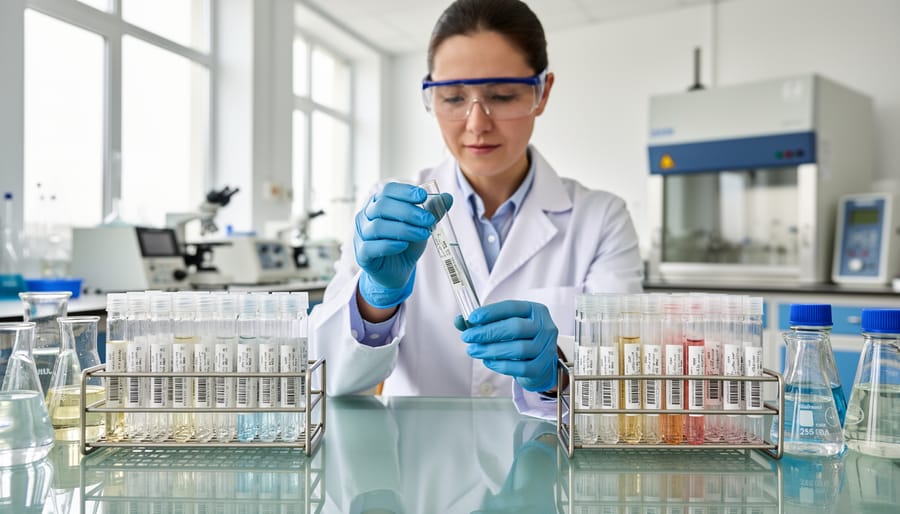
Attention to quality standards is non-negotiable when sourcing research peptides for scientific studies. In academic and institutional settings, reputable peptide suppliers back their products with detailed documentation of purity, typically measured by high-performance liquid chromatography (HPLC) and mass spectrometry analysis. This helps researchers verify that the compounds meet the required specifications, ensuring results aren’t compromised by impurities or unknown contaminants.
Third-party testing acts as an added safeguard. Established suppliers, especially those catering to cross-Atlantic collaborations between Canadian and French research groups, regularly submit batches to independent laboratories for validation. These certificates of analysis are not just a formality: they are reviewed by procurement teams before peptides are approved for use in research. For example, a laboratory at Université Laval or McGill might request confirmation that a peptide adheres to internationally recognized thresholds, such as >95% purity for most applications.
Certifications also matter. Accreditation from regulatory bodies, like ISO 9001 or GMP (Good Manufacturing Practice), signals that a supplier adheres to strict protocols in manufacturing and quality control. This rigorous approach underpins the scientific credibility and reproducibility of studies, facilitating smoother collaborations and trust between French and Canadian researchers, and reinforcing the cultural bridge that high-quality science depends upon.
The Role of Academic Procurement
Universities across Canada, whether operating primarily in French or English, follow rigorous procurement protocols when sourcing research peptides. These institutions typically maintain approved vendor lists developed through systematic evaluation processes that assess supplier credentials, product quality documentation, and compliance with Canadian research standards.
Research centers establish vendor relationships through formal request-for-proposal processes. Purchasing departments work alongside principal investigators to verify that suppliers provide comprehensive certificates of analysis, demonstrate consistent purity levels, and maintain proper documentation chains. This collaborative approach ensures that researchers receive materials meeting their specific experimental requirements while satisfying institutional accountability measures.
French-language institutions like Université de Montréal and Université Laval operate procurement systems that mirror their English-speaking counterparts, though documentation may flow in both official languages. These centers often participate in consortium purchasing agreements, leveraging collective buying power to secure better pricing and terms while maintaining stringent quality standards.
The procurement cycle includes regular supplier audits and performance reviews. Institutions track delivery reliability, product consistency, and responsiveness to quality concerns. When issues arise, procurement teams coordinate with researchers to address discrepancies and, if necessary, identify alternative suppliers. This systematic oversight protects research integrity by ensuring that experiments rely on verified, high-quality peptides rather than materials from untested sources. The relationship between institution and supplier becomes a partnership built on transparency, accountability, and shared commitment to advancing scientific knowledge.
French-Canadian Innovation in Peptide Research
Québec’s research institutions have emerged as powerhouses in peptide science, driven by a unique fusion of French intellectual tradition and Canadian innovation. The Université de Montréal’s Institute for Research in Immunology and Cancer (IRIC) has pioneered work on therapeutic peptides targeting cancer cell pathways, publishing groundbreaking studies in both French and English-language journals. This bilingual approach mirrors the broader pattern of French-Canadian cooperation that enriches scientific discourse across the Atlantic.
Researchers at Université Laval’s Faculty of Medicine have developed novel peptide synthesis methods that reduce production costs by nearly 40%, making research-grade peptides more accessible to institutions worldwide. Their collaboration with French laboratories in Lyon and Paris demonstrates how linguistic affinity accelerates knowledge transfer. When scientists can discuss complex molecular structures and experimental protocols in their shared language, they often identify nuances that might be lost in translation.
The Centre de recherche du CHU de Québec has focused specifically on antimicrobial peptides, addressing antibiotic resistance through compounds inspired by natural defense mechanisms. Their work gained international recognition when a team led by Dr. Marie-Claude Lavallée identified a peptide sequence that shows promise against drug-resistant bacterial strains. Publications from this group frequently cite cross-border exchanges that function much like a co-production agreement between cultural industries, where each partner brings distinct strengths to create something neither could achieve alone.
Montreal’s ecosystem of biotech startups, many founded by francophone scientists, has commercialized peptide research for therapeutic applications. These companies maintain strong ties to academic institutions, creating a virtuous cycle where fundamental research informs commercial development, which in turn funds further investigation.
The cultural dimension extends beyond language. French-Canadian researchers often approach peptide science with an emphasis on elegant molecular design, a philosophical parallel to French aesthetics in art and architecture. This perspective values not just what works, but how it works, seeking solutions that are both effective and conceptually refined.
Navigating the Ethical Landscape: Research Integrity and Responsible Use
The ethical framework surrounding research peptides extends far beyond simple regulatory compliance, it represents a fundamental commitment to scientific integrity that both French and Canadian academic institutions take seriously. When laboratories acquire research peptides for sale, they enter a relationship built on trust, transparency, and accountability to the broader scientific community and society at large.
In Quebec’s research centers and across Canadian universities, institutional review boards play a critical role in overseeing peptide research protocols. These committees evaluate proposed studies not only for scientific merit but also for adherence to ethical standards that protect both researchers and the integrity of the work itself. The process ensures that every peptide acquired serves a legitimate scientific purpose, documented and justified through rigorous proposal reviews. French-speaking institutions like Université Laval and McGill University have developed comprehensive frameworks that align with both Canadian federal guidelines and international standards, creating a robust system of checks and balances.
The distinction between legitimate research and misuse becomes particularly important given that some peptides available for scientific study have attracted attention beyond academic circles. Responsible suppliers and institutions work together to prevent diversion by implementing verification processes, maintaining detailed purchase records, and requiring institutional credentials. This collaborative approach mirrors the transparency valued in French academic culture, where ouverture and accountability form the foundation of scientific discourse.
Canadian researchers benefit from a dual regulatory environment that incorporates both federal oversight and provincial academic standards, creating layers of protection against ethical breaches. In French Canada, this is complemented by a strong tradition of collegial accountability, researchers hold each other to high standards through peer review, collaborative oversight, and open scientific dialogue. Training programs at institutions like Université de Montréal emphasize not just technical proficiency but also the ethical obligations that come with peptide research.
The proper handling, storage, and documentation of research peptides represents another crucial ethical dimension. Laboratories must maintain detailed logs tracking peptide use, ensuring that materials purchased for specific approved projects aren’t diverted or misused. This meticulous record-keeping serves multiple purposes: it satisfies regulatory requirements, enables reproducibility in scientific studies, and demonstrates institutional commitment to responsible stewardship of research materials.
Building Bridges: How Peptide Research Connects French and Canadian Scientific Communities

The peptide research community transcends borders, and nowhere is this more evident than in the vibrant exchange between French and Canadian scientists. Annual symposia like the Montreal Peptide Symposium draw researchers from Paris, Lyon, and Marseille to collaborate with colleagues from McGill, Université de Montréal, and Université Laval. These gatherings aren’t just technical conferences, they’re cultural crossroads where scientific discourse flows seamlessly between French and English, enriching both the research and the relationships.
Joint publications between French and Canadian institutions have surged in recent years, with co-authored papers in journals like Peptide Science and Bioorganic & Medicinal Chemistry showcasing shared expertise in synthesis methods, therapeutic applications, and analytical techniques. When a team from the Institut Pasteur collaborates with researchers at the University of Toronto, the partnership brings together distinct methodological traditions, French emphasis on structural elegance meets Canadian pragmatism in application, creating stronger science than either approach alone.
Exchange programs enable graduate students and postdocs to spend semesters in partner labs, learning not only new techniques but also gaining fluency in scientific communication across languages. A researcher who can present findings at a science discussion event in both French and English opens doors to funding opportunities from Agence Nationale de la Recherche in France and the Natural Sciences and Engineering Research Council in Canada. For those seeking to strengthen their bilingual capabilities, programs to learn French online have become increasingly popular among Canadian researchers preparing for collaborative projects.
The cultural dimension matters profoundly. Shared meals at conferences, informal café discussions about experimental design, and the natural code-switching between languages during lab meetings create bonds that outlast individual projects. These connections have led to multi-year research consortia tackling complex challenges in peptide therapeutics, with teams working across time zones and continents united by common scientific goals and mutual respect for linguistic diversity.
The landscape of research peptides represents far more than a scientific marketplace, it embodies the powerful convergence of rigorous inquiry and meaningful cultural exchange. Throughout this exploration, we’ve witnessed how French-Canadian collaboration has carved out a distinctive space in peptide research, demonstrating that linguistic diversity and cultural perspective enrich scientific understanding rather than complicate it.
The procurement and study of research peptides for legitimate academic purposes continues to advance our knowledge across numerous fields, from cellular biology to therapeutic development. What sets the French-Canadian contribution apart is its inherent commitment to bilingual dialogue and cross-cultural partnership. When researchers from Québec collaborate with counterparts in France, Belgium, or other Francophone nations, they’re not simply exchanging data, they’re weaving together different intellectual traditions and methodological approaches that strengthen the entire scientific endeavor.
This cultural dimension matters precisely because science thrives on diverse perspectives. The questions French-Canadian researchers ask, the problems they prioritize, and the solutions they envision are shaped by their unique position at the crossroads of North American pragmatism and European academic tradition.
As peptide research continues to evolve, the French-Canadian scientific community stands poised to make increasingly significant contributions. For readers interested in French culture and Canadian innovation, this field offers a compelling reminder that our greatest advances often emerge where different worlds meet, converse, and collaborate. La science n’a pas de frontières, science knows no borders, but culture gives it meaning.